The Latest from Boing Boing |  |

- LibDem Lords seek to ban web-lockers (YouSendIt, etc) in the UK
- Blind gamer speedruns Zelda with help of 100,000+ keystroke script
- Building high-speed wireless in Afghanistan out of garbage
- Hacked Roomba will google your house
- HOWTO make smarter dumb mistakes about the future
- Campus atheists offer free porn in exchange for Bibles
- When fictional vampires duke it out
- Ode to a New Delhi median
- If you blog unauthorized "Daily Show" or "Colbert" clips, Viacom will sue your ass
- Coming to a theater near you: Missile Command, Space Invaders, and Asteroids.
- Coral reefs may disintegrate by end of century, scientists warn
- HOWTO mine gold in Nicaragua
- Sacha Baron Cohen will not reveal James Cameron's Na'vi love child
- Teen Wolf costume for pug
- Mans sues for right to flip the bird at police officer
- Finding a maker: A true story
- Kashmere Stage Band: deep high school funk from the late 1960s
- Japan Airlines can't stop black market in stewardess uniforms
- Tiny glass bell jar display case
- Figure out Toyota's problem: Win $1 million
- Jorge Ben, "Ponta de Lança Africano (Umbabarauma)" (Greatest Song of All Time of the Day)
- Gallery: Valve tease Steam/Half-Life/Left 4 Dead for Macs, in style
- EFF's annual DMCA whitepaper gets a refresh
- By all that is holy and miserable, I want this watch and will never own it
- "Ten Dollar Cover," an excerpt from a novel-in-progress/disarray
- Cheap bumwad scare-ads of the late 1920s
- Wedding invite in 8-bit game form
- Rocketboom at Morbid Anatomy Library
- The Evil Mad Scientists make a five-color LED-lit fake-seven-segment pseudo-digital pot, based on advanced mattress pad technology
- CT scanning mummy crocodiles
| LibDem Lords seek to ban web-lockers (YouSendIt, etc) in the UK Posted: 04 Mar 2010 04:26 AM PST Since I posted yesterday about the UK LibDem Peers' introduction of a pro-web-censorship amendment to the Digital Economy Bill, the Peers have withdrawn their proposal and entered a revised one jointly with Conservative Lords. Unfortunately, this amendment is even worse in some ways. In a posting on Liberal Democratic Voice, Lord Clement-Jones explains that his amendment is intended to attack "web-lockers," such as YouSendIt and RapidShare: The Digital Economy Bill, as currently drafted, only deals with a certain type of copyright infringement, namely peer-to-peer file sharing. Around 35% of all online copyright infringement takes place on non peer-to-peer sites and services. Particular threats concern "cyberlockers" which are hosted abroad.The idea that web-lockers should be blocked nationwide by court order is a bad idea: 1. Web-lockers are useful for more than piracy. I routinely use web-lockers for my own business and personal affairs. When I need to send a large video of my daughter playing to my parents, a web-locker is the simplest way of doing this. Web-lockers are also a vital part of how I produce my audiobooks and podcasts, since they allow me to privately share large pre-release audio-files with readers, editors and publishers. Web-lockers are also how I communicate with my attorneys and accountants for transmission of sensitive documents, such as scans of my passport and bills. 2. The reason web-lockers are useful for piracy is because they support privacy. The entertainment industry's principle objection to web-lockers is that their contents are private, and cannot be readily survielled by copyright enforcement tools. When I send a video of my daughter in the bath to her grandparents, the only people who can download that video are the people who have access to the private URL for the locker. This is the same mechanism that infringers use to avoid detection: upload an infringing file and share the URL with friends. You can't fix the web-locker problem without attacking the right of Internet users to privately share large files with one another. 3. The establishment of a national blocklist is itself a bad idea. Creating a facility whereby ISPs can be compelled to block entire websites is a bad idea on its face. The security problems raised by such a facility are grave (a hijacker could use it to block the BBC, or Parliament, or Google), and the temptation to extend this facility for use in other civil actions, (say, libel) will be great. Also, as my friend Lilian Edwards has pointed out, the LibDem proposal does not stipulate how long sites must be blocked for, nor what the procedure is for unblocking them. 4. There is no evidence that this will work. Dedicated infringers have shown a willingness and capability to use technologies such as proxies to evade firewalls. These proxies -- many of them legitimate businesses at home and abroad -- are cheap and easy to use, and make it trivial to evade ISP-level filtering. However, "good guys" (small traders, individuals wishing to share private material with friends and family) should not have to bear the expense and difficulty of evading the Great Firewall of Britain to do legitimate business on the net. 5. This is bad for the nation. The only country to enact anti-web-locker legislation to date is South Korea, which brought in a similar measure to the LibDem proposal as a condition of its Free Trade Agreement with the USA, whose IP chapter focused largely on locking down the Korean Internet. In the time since the US-Korea FTA, Korea has slipped badly in the global league tables for ICT competitiveness, going from being a worldwide leader in technology to an also-ran. I have sent a version of these comments to both of the LibDem peers using ORG's Write to Them links. I hope you'll get in touch with them, too. This is a grave blunder for the supposed "party of liberty," especially on the eve of a national election. Update: According to a post on LibDem Voice, Clement-Jones draws a salary of £70,000 to serve as Co-Chairman of law firm DLA Piper's global government relations practice. DLA Piper is "one of the largest groups of IP lawyers in the world" and has "acted for, and lobbied on behalf of, the RIAA and MPAA in the past." Previously:
  |
| Blind gamer speedruns Zelda with help of 100,000+ keystroke script Posted: 03 Mar 2010 10:11 PM PST A group of gamers from around the world created a 100,000+ keystroke script for speedrunning The Legend of Zelda, which was used by a blind gamer in Ontario complete the game. Jordan Verner, who is blind, posted a video of himself playing Zelda and asking for help to complete the game. This inspired other gamers to spend two years composing a script that Verner could follow, and at last he did: So Williams and thee other diehard gamers each took different parts and copied down every single move.Camden man's project helps blind man beat video game (via Neatorama) Previously:   |
| Building high-speed wireless in Afghanistan out of garbage Posted: 03 Mar 2010 09:52 PM PST Volunteers in Afghanistan -- both locals and foreigners from the MIT Bits and Atoms lab -- have been building out a wireless network made largely from locally scrounged junk. They call it "FabFi" and it's kicking ass, especially when compared with the World Bank-funded alternative, which has spent seven years and hundreds of millions of dollars and only managed its first international link last summer. The Jalalabad Fab Fi Network Continues to Grow With a Little Help from Their Friends (via Futurismic)   |
| Hacked Roomba will google your house Posted: 03 Mar 2010 11:11 PM PST Swedish hackers have put together the GåågleBot: "a 'home crawler' consisting of a vacuum roomba with an on board webserver and camera. While the vacuum goes about its business, it extracts text from the images it takes. The text is later put in a database on the roomba and searchable through a web interface." The idea is that you release this thing and it crawls your house and indexes everything that has text on it. Later, you can google your house, asking the index to find you books, groceries, CDs -- anything with a label. Lots of people have written to me to tell me that this reminds them of the roommateware I wrote about in my novel Makers, and I can see what they mean. But to my mind, the science fiction that this most strongly evokes is Paul Ford's Robot Exclusion Protocol, one of the funniest and most prescient bits of technospeculation I've ever read (go read it now, it's short and you'll thank me). Previously:
  |
| HOWTO make smarter dumb mistakes about the future Posted: 03 Mar 2010 09:21 PM PST My latest Locus magazine column, "Making Smarter Dumb Mistakes About the Future," is about the ways that corporate futurism goes astray, imagining futures that make the boss happy which never come to pass. It's based on the magnificent and wondrously wrong "Carousel of Progress" that Walt Disney creates for GE's pavilion at the 1964 NYC World's Fair, an updated version of which lives at Walt Disney World. I love that thing to bits. I wish it would fit on my desk, I'd put it there like the old poets used to keep a skull by their elbows, to remind them of their hubris and frailty. Also, if I had one on my desk, I could stop dragging my family onto it. My wife has written a new chorous to the themesong (which goes, "There's a great big beautiful tomorrow, shining at the end of every day"): "There's a great big hairy Cory Doctorow, sitting in the front row every day." Making Smarter Dumb Mistakes About the Future Previously:
  |
| Campus atheists offer free porn in exchange for Bibles Posted: 03 Mar 2010 09:13 PM PST  Atheist Agenda, a campus group at U Texas San Antonio, has created a "Smut for Smut" program, where they'll trade you high-grade porn in exchange for your Bibles and other religious material. The idea is to highlight that the Bible is as full of bad ideas and bad depictions of those ideas ("a woman is worth half a man") as pornography. Atheist Agenda, a campus group at U Texas San Antonio, has created a "Smut for Smut" program, where they'll trade you high-grade porn in exchange for your Bibles and other religious material. The idea is to highlight that the Bible is as full of bad ideas and bad depictions of those ideas ("a woman is worth half a man") as pornography. Many of my friends espouse some kind of faith, and it's clear to me that they get some good out of it. My feeling is that religion and faith, like music or sports or drugs or creativity, is a way of making parts of your brain light up in a way that is pleasurable and that often encourages you to do good. I think that part of it is good. But just like all of those things, religion and faith make some people do bad things, as they find pathological ways of evoking the pleasurable sensation in their minds. I also think that the pleasurable sensation that attends the numinous state is a powerful conditioner of behavior, and that it can be exploited to get people to do terrible things (cf violent religious extremism), or merely things that are not good for them (deferring to religious authorities with bad ideas, giving money they can't afford to religious causes). Well, we have Bronze Aged tribal nonsense, these things written by people in tents ages ago, and we're using this to renounce science standards in our classrooms in America. We're using it to kind of influence our political agenda.Trading bibles for porn in San Antonio (Thanks, Fipi Lele!) (Image: Holy Bible, a Creative Commons Attribution photo from Steve Snodgrass' photostream) |
| When fictional vampires duke it out Posted: 03 Mar 2010 08:58 PM PST  "Down for the Count," a painting by Deviant Art's Poopbear, shows the Count from Sesame Street laying into the fangy-come-lately prettyboy from Twilight. It cheered me. Down for the Count (Thanks, Fipi Lele!)   |
| Posted: 03 Mar 2010 08:55 PM PST Dave sez, "I'm an American who writes about life in New Delhi. I recently posted an essay about the story of a humble concrete median near my house -- and how the insignificant pressures of daily use, multiplied by the millions of people who used it, reduced it to rubble. It's a synecdochic symbol for the larger infrastructure challenges faced by countries like India, where they can't get ahead because they're constantly struggling to maintain what they already have. " death of a median, part I: an ode to Aurobindo Marg (Thanks, Dave!) Previously:
  |
| If you blog unauthorized "Daily Show" or "Colbert" clips, Viacom will sue your ass Posted: 03 Mar 2010 07:26 PM PST  News broke yesterday that Comedy Central would no longer allow popular video site Hulu to present episodes of "The Daily Show" and "The Colbert Report." News broke yesterday that Comedy Central would no longer allow popular video site Hulu to present episodes of "The Daily Show" and "The Colbert Report." "Yes, we intend to do so," PR rep Tony Fox told THR. "My feeling is if (websites) are making money on our copyrighted content, then that is a problem." What a big steaming pile of epic fail. How 'bout blogs (like, oh, let's say Boing Boing) start suing Viacom for every time a Comedy Central writer lifts an idea, a blog post, a funny turn of phrase, or a story—and fails to credit, namecheck or pay us? Cmon guys, you know you do it. Television suit-people, when will you ever learn: we are the internet. We are your traffic machine. We are your idea machine. We are the engine that propels your shows. Why do you treat us like thieves? (via EFF) |
| Coming to a theater near you: Missile Command, Space Invaders, and Asteroids. Posted: 03 Mar 2010 06:11 PM PST Motion picture adaptations of the classic electronic games Missile Command, Space Invaders, and Asteroids are in the works. "With three vintage video games in development at three studios, can Pac-Man or Frogger be far behind?" Perish the thought. (via Chris Baker)   |
| Coral reefs may disintegrate by end of century, scientists warn Posted: 03 Mar 2010 06:14 PM PST Carnegie Institution researchers say coral reefs are overwhelmed by the effects of climate change, and may "disintegrate before the end of the century as rising carbon dioxide levels in the atmosphere make the oceans more acidic." (via Al Gore)   |
| Posted: 03 Mar 2010 06:00 PM PST  A photo-essay by James Rodriguez documenting the history and consequences of mining activities, both artisanal and industrial, in the so-called mining triangle in northeastern Nicaragua. Includes step-by-step documentation of the hazardous homemade hacks poor "artisanal" miners use to eke gold out of the earth. (Courtesy Oxfam America and MiMundo.org) A photo-essay by James Rodriguez documenting the history and consequences of mining activities, both artisanal and industrial, in the so-called mining triangle in northeastern Nicaragua. Includes step-by-step documentation of the hazardous homemade hacks poor "artisanal" miners use to eke gold out of the earth. (Courtesy Oxfam America and MiMundo.org)  |
| Sacha Baron Cohen will not reveal James Cameron's Na'vi love child Posted: 03 Mar 2010 06:23 PM PST Bümmer, Brüno. An Academy Awards telecast skit planned by Sacha Baron Cohen with Ben Stiller, in which the "discomfort comedian" planned to present himself as a female Na'vi knocked up with James Cameron's blue lovechild, has been kiboshed. (nymag.com)   |
| Posted: 03 Mar 2010 04:37 PM PST  I usually don't care for dog costumes but this one is terrific. I usually don't care for dog costumes but this one is terrific. |
| Mans sues for right to flip the bird at police officer Posted: 03 Mar 2010 04:32 PM PST Robert Ekas of Oregon was ticketed for giving the finger to a police officer. Now he is suing the police for the right to flip off the cops. |
| Posted: 03 Mar 2010 04:10 PM PST Dale Dougherty, publisher and editor of MAKE wrote a nice little account of accidentally meeting a maker in his neighborhood. Finding a maker: A true story   |
| Kashmere Stage Band: deep high school funk from the late 1960s Posted: 03 Mar 2010 03:00 PM PST  In 1967, music teacher Conrad Johnson saw Otis Redding play and decided to bring that vibe back to Kashmere High School's student band. The result was deep, brilliant, big band funk. Cult favorites of rare groove trainspotters, the Kashmere Stage Band's recordings were reissued a few years ago by Now Again Records. Grab a taste at MySpace. From the Kashmere Stage Band description: Kashmere Stage Band (MySpace, thanks Jean Hagan and Jason Perkins!) Kashmere Stage Band: Texas Thunder Soul 1968-1974 (Amazon)   |
| Japan Airlines can't stop black market in stewardess uniforms Posted: 03 Mar 2010 02:22 PM PST  Authentic Japan Airline outfits sell for as much as £11,000 on the black market. They are in high demand for sex role play. New Japan Airlines (JAL) uniforms have long been in demand in the local sex industry for customers keen on role-playing fantasies, while rare specimens that have actually been worn are hugely sought after by fetishists and are worth their weight in gold. Japan Airlines faces boom in black-market demand for stewardess uniforms |
| Tiny glass bell jar display case Posted: 03 Mar 2010 01:49 PM PST  This itty bitty display kit (which includes a wood stand, felt pad, and bell jar) is a perfect way to show off your 1-inch-tall Woolly Mammoth, T-Rex, or Triceratops Tinysaur. But it could also be used to show other tiny artifacts: a child's baby tooth, a chunk of aerogel, a tritium keychain fob, or anything else that's both meaningful and miniature. It's available in the Boing Boing Bazaar for $12. Previously:   |
| Figure out Toyota's problem: Win $1 million Posted: 03 Mar 2010 01:19 PM PST Nobody knows why Toyota cars are having issues with "unintended acceleration". In fact, there's some evidence that all makes of cars do the same thing at a similar rate—it just looks like more Toyotas because there's more of those on the road. Now, Edmunds.com is making an offer: Recreate the accelerator issues under controlled conditions and prove the cause, and you could win $1 million.   |
| Jorge Ben, "Ponta de Lança Africano (Umbabarauma)" (Greatest Song of All Time of the Day) Posted: 03 Mar 2010 04:32 PM PST There's Brazilian music, there's African music, and then there's the occasional genius who can fuse the two. Rio's Jorge Ben, who came to prominence during the Tropicalia era, mixes samba, rock, and pretty much any West African rhythm you can think of. "Umbabarauma," from his 1976 album Africa Brasil, might have the wildest and most propulsive rhythm guitar intro anyone has ever heard. And then it gets wilder and more propulsive. Turn it up! "Ponta de Lança Africano (Umbabarauma)" enjoyed a second life a decade later among rock listeners when David Byrne used it to kick off Beleza Tropical, the first of his top-notch Brazilian compilations, which inspired this video remix:   |
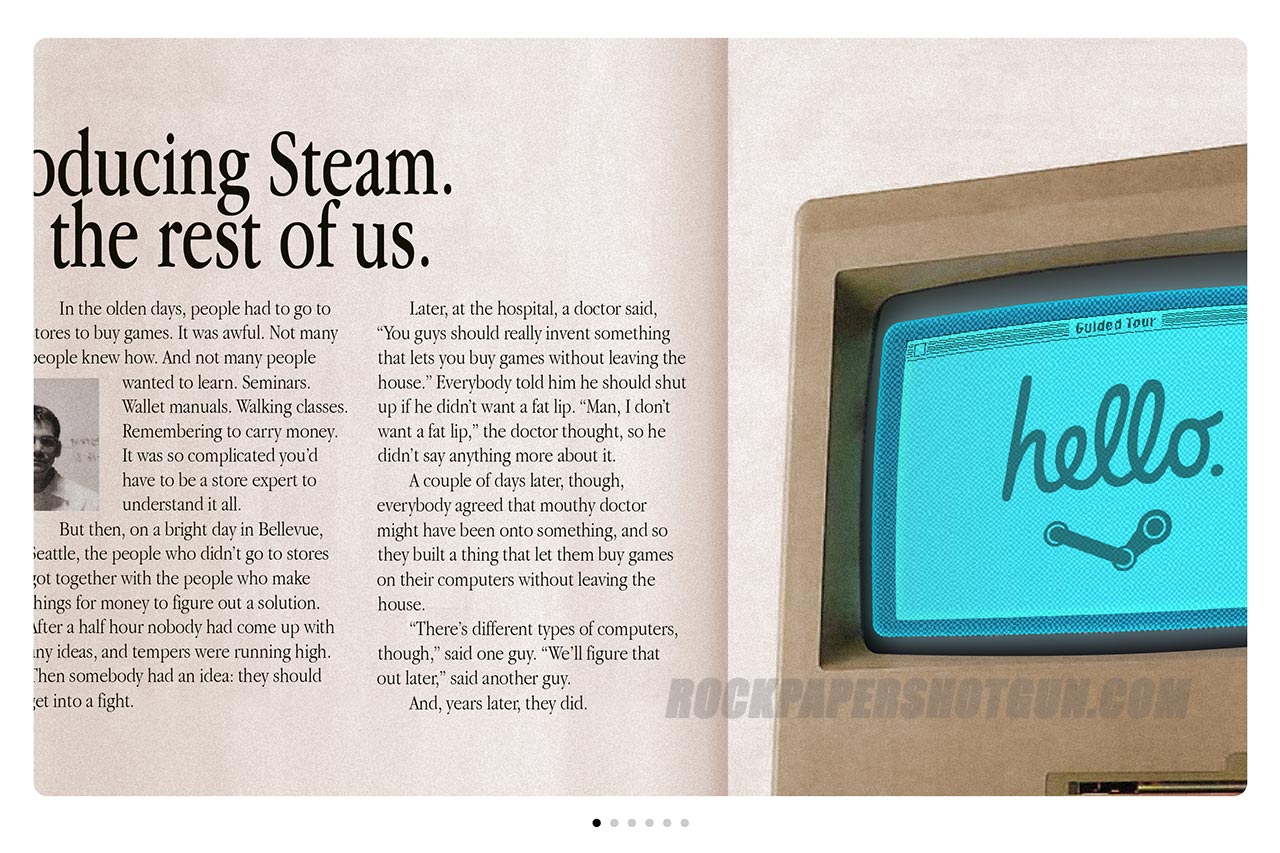
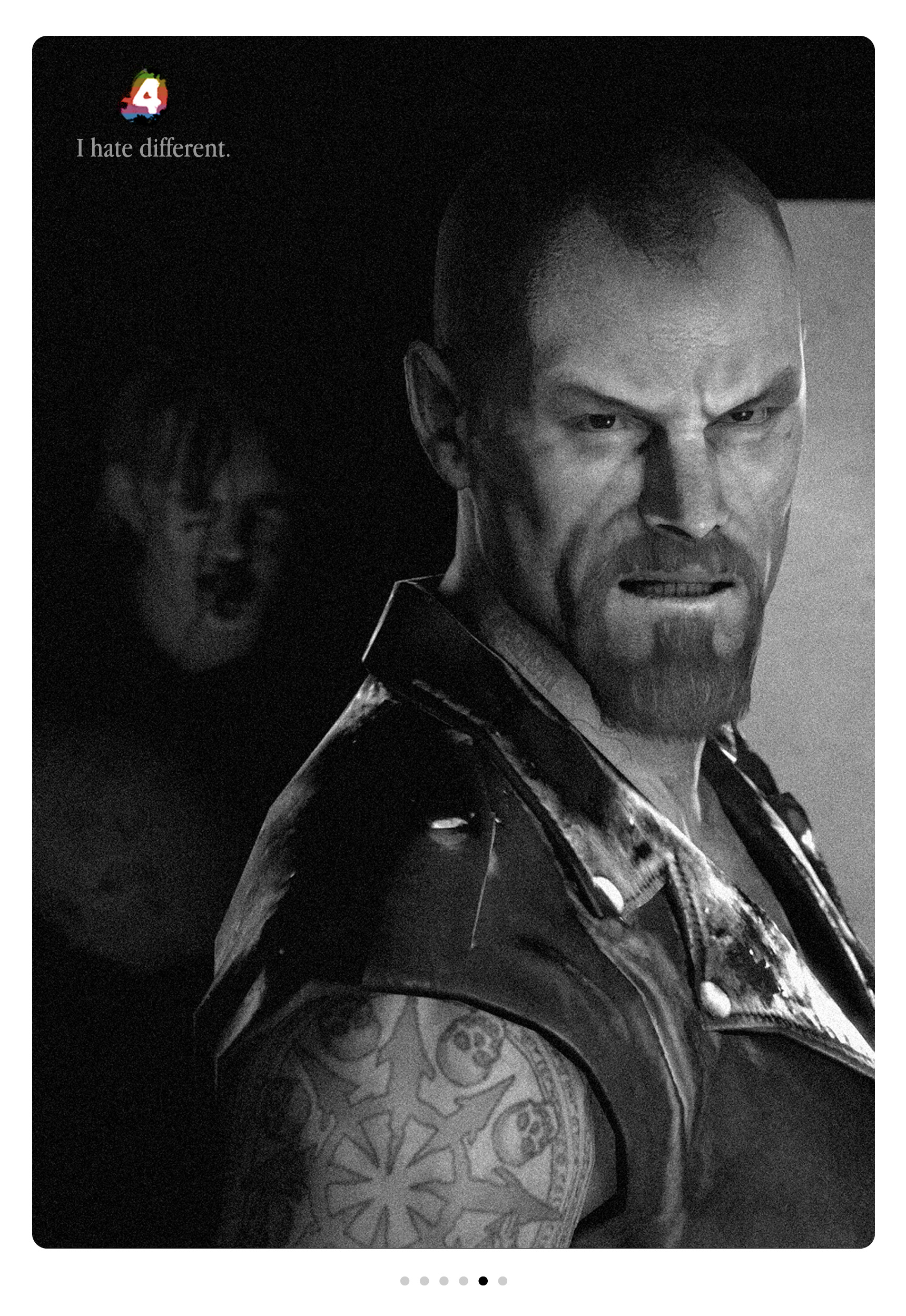
| Gallery: Valve tease Steam/Half-Life/Left 4 Dead for Macs, in style Posted: 03 Mar 2010 01:37 PM PST 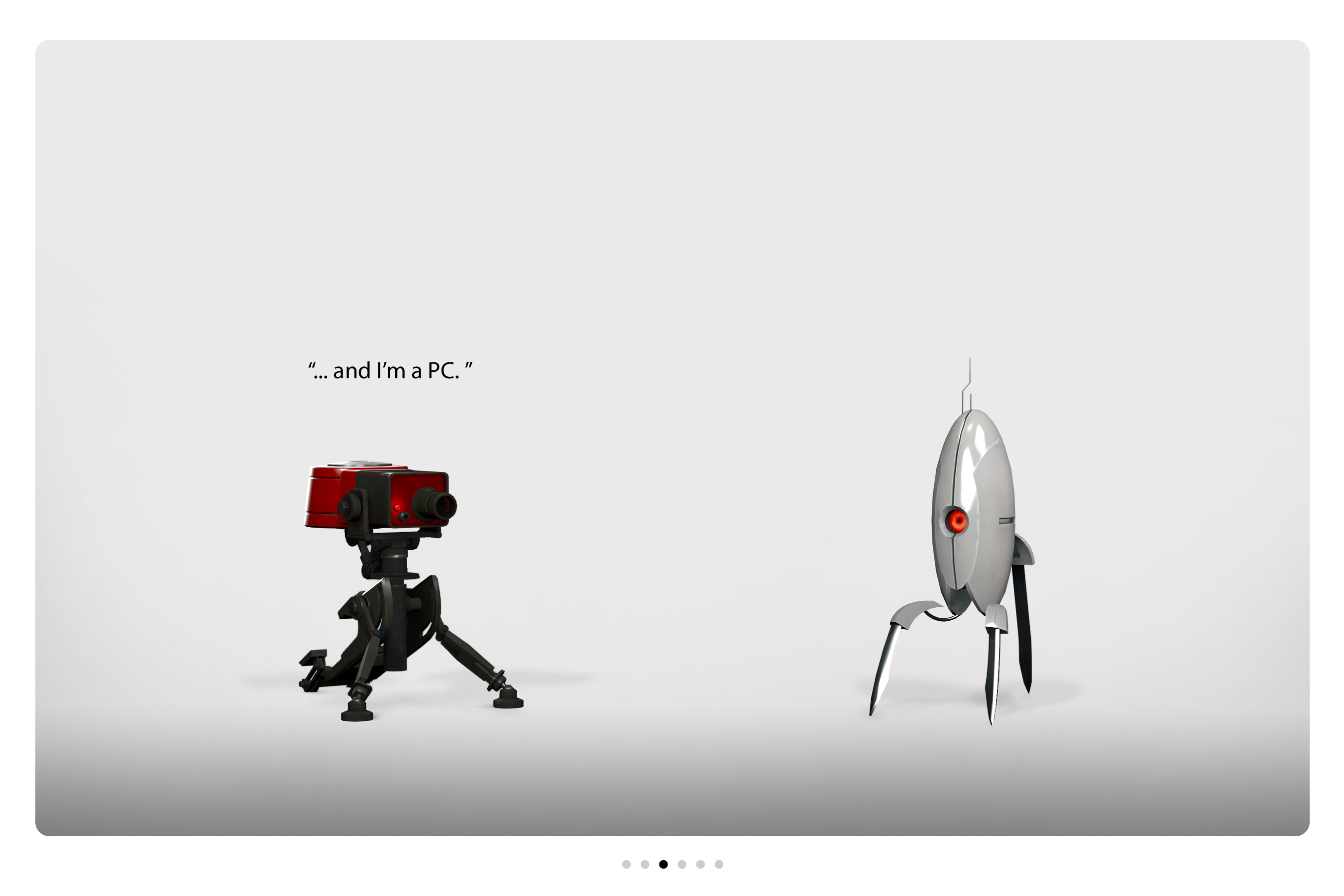 If you thought Valve's switch from Internet Explorer to WebKit for its new beta version of digital distribution platform Steam -- or the semi-irrefutable hints of OSX compatibility within -- were just coincidence, this morning's latest viral blast should seal the deal. Just days after ramping up a fantastic campaign hinting at new developments with their Portal, the developer let loose a set of images sent not only to games press like RockPaperShotgun and Eurogamer, but MacRumors, as well. With an Apple-logo-emblazoned Gordon Freeman, iPod-ad-silhouetted Team Fortress 2 Heavy, and John Hodgman/Justin Long dual-turret montage, the message is pretty clear. Below is a hi-res collection of all the images released thus far. With their iPhone-esque "dot" navigation at the bottom of each image, there seems to be just one more to go [UPDATE: MacWorld got the final image of Half-Life's Alyx disrupting a version of Apple's classic 1984 ad], and with just days to go to the 2010 Game Developers Conference, we're likely less than a week away from their grand finale. If you thought Valve's switch from Internet Explorer to WebKit for its new beta version of digital distribution platform Steam -- or the semi-irrefutable hints of OSX compatibility within -- were just coincidence, this morning's latest viral blast should seal the deal. Just days after ramping up a fantastic campaign hinting at new developments with their Portal, the developer let loose a set of images sent not only to games press like RockPaperShotgun and Eurogamer, but MacRumors, as well. With an Apple-logo-emblazoned Gordon Freeman, iPod-ad-silhouetted Team Fortress 2 Heavy, and John Hodgman/Justin Long dual-turret montage, the message is pretty clear. Below is a hi-res collection of all the images released thus far. With their iPhone-esque "dot" navigation at the bottom of each image, there seems to be just one more to go [UPDATE: MacWorld got the final image of Half-Life's Alyx disrupting a version of Apple's classic 1984 ad], and with just days to go to the 2010 Game Developers Conference, we're likely less than a week away from their grand finale.  |
| EFF's annual DMCA whitepaper gets a refresh Posted: 03 Mar 2010 12:44 PM PST EFF has updated its annual(ish) white paper, "Unintended Consequences: ___ Years Under the DMCA" (currently standing at 12 years). This is one of EFF's most compelling pieces of policy writing, a huge, well-organized and tightly argued indictment of the 1996 US Digital Millennium Copyright Act, a train-wreck of a copyright law that opened the door to censorship, surveillance, and widespread use of crippling software locks. If you want to read an unstoppable bulldozer of a white-paper, this is your lucky day. Unintended Consequences: Twelve Years under the DMCA Previously:   |
| By all that is holy and miserable, I want this watch and will never own it Posted: 03 Mar 2010 12:37 PM PST  Watch designer Thomas Prescher has worked out how to make every hair on my neck stand up in eerie synchrony with this Flying Double-Axis Tourbillion, a transparent, self-winding watch with integrated calendar that I will never, ever be able to afford. All the gubbins are tucked away in the sides of the watch, leaving just the instrumentation parts on display, in a kind of flippant "screw-you-I-am-miniature-FEAR" gesture to every other watch's workings. Watches like this are what I dream about when I am dreaming about watches. Man, I can't wait until I can print one of these on my desktop. Thomas Prescher's Mysterious Automatic Double Axis Tourbillon Previously:   |
| "Ten Dollar Cover," an excerpt from a novel-in-progress/disarray Posted: 03 Mar 2010 12:39 PM PST  Some (OK, two) of my friends have written me to suggest that, since I mentioned in my intro guestblogging post that I'm working on a novel, I should include some small pieces of that novel-in-progress/disarray here. I'm a bit nervous about this, but OK. The Rock Star Next Door (working title) is a sometimes comic novel about the pop music industry, this passage is pretty much all description with only the faintest tip to the plot, and I'll start the 1,300-word excerpt after the jump so those merely cruising the Boing Boing front page don't have to deal with fiction if you don't want to. Some (OK, two) of my friends have written me to suggest that, since I mentioned in my intro guestblogging post that I'm working on a novel, I should include some small pieces of that novel-in-progress/disarray here. I'm a bit nervous about this, but OK. The Rock Star Next Door (working title) is a sometimes comic novel about the pop music industry, this passage is pretty much all description with only the faintest tip to the plot, and I'll start the 1,300-word excerpt after the jump so those merely cruising the Boing Boing front page don't have to deal with fiction if you don't want to.I call this fragment-in-progress "Ten Dollar Cover": Jack takes it all in: That boring early-evening quiet in a club, post-soundcheck, before paying people show up, some staff at tables, drinking, smoking, crew standing at bar, finishing the Value Meals one of them bought at the McDonald's across the street, green rubber covers on tables. Someone switches on the TV by the bar even though one of the band's mix CDs is playing already. It's too early for the place to smell like beer or for your sneakers to stick to beer on the floor. Now, still a little light coming through the front door, the hall smells like cigarettes. Not even menthols. The sight lines at these clubs are an abomination against usable design, like those teapots with the handle one the same side as the pourer. None of these buildings were designed for live music, sometimes beams are right in front of the stage, sometimes the bar is right next to the stage, sometimes the entrance or fire exit is right next to or behind the stage, often there is no way for band members to get to the stage except through the crowd, if there is a crowd. A crowd. At arenas and theaters, there's this same emptiness before the doors open, but there's more confidence, too. No one thinks the place will stay empty; no one would have booked the place if it wasn't likely to be filled, mostly. There's infrastructure. The emptiness and space and sometimes silence of an empty pre-show arena feels reassuring, transitory, the lull before a hurricane that has 100% chance of smashing down the silence. An empty bar, even if there's the beginning of a line visible outside, feels more permanent. An hour later, such fears seem absurd. The door opens, everyone shows their (or someone else's) drivers license to the woman behind the podium, and slowly the room fills, first the bar, then the tables around the bar, then the pool tables under the Bud Light sign. And then one person, always a young man, ambles up to the stage, right in front, front row center if there were seats on the wood floor. The presence of one person in front of the low stage pulls pairs over from the bar and the tables. The first pairs are young men, friends in rock, eager to be in front, and then you see the first woman led across the floor by her date. It's always the boys who want to be in front for these bands, even if by accident a couple members of the band turn out to be attractive to women. It's the women, of course, that the band members are hoping to attract. When they see women, you can see their behavior change onstage. They all want to get the girls' attention, and they're juvenile in their competition for what the drummer acknowledges as "the occasional lucky poon." If the pair of women are all the way to one side of the stage, you can see the boys in the band gradually work their way to that far edge. Grown men move microphone stands from one end of the stage to another to be closer to the women. Grown men turn their carefully tuned and placed drum kits at 90-degree angles so they can smile at the women while they play. We're still hours before the band can come onstage and notice those women. The band is sequestered at the Middle Eastern restaurant upstairs, inhaling the falafel dishes that will inspire a million fart jokes before, during, and after the show. The falafel dishes don't cost much more than the Value Meals the roadies have abandoned, but it's the ambience - the tables, the cleaner restrooms, the Jordanian music, the aging belly dancer - that make it a better choice. They work through the meals quickly, in part because they haven't eaten for real all day, in part because the sound check ended an hour late and no one wants the food too close to the surface when the DJ or whoever calls their name and onstage they go. The dance floor is mostly filled when the band members return to the club (through the front door because no one heard their knocks and kicks on the metal door out back). A brief exchange at the podium confirms they are indeed the band and most of the 70 or so people standing on the dance floor (no one is dancing) follow them with their eyes as they walk to the tiny dressing room behind the mixing board. The dressing room appears to have been renovated roughly around the time our ancestors crawled out of the primordial muck. A light layer of cloth on a steel frame, an Inquisition-ready piece of furniture that once was a couch, remains empty. Band members mill, sit on plastic milk crates while they tune their guitars, add to the magic-marker words and images hemorrhaging all over the wall. There's no one onstage, not even a roadie, so many on the dance floor are looking to the side, where a big screen on the far side of the bar is playing a reality TV show about a boy band that wants to be *NSYNC, all on the screen charmingly unaware that *NSYNC has peaked already, dragging down all the other five-boy vocal groups with it. The bar is full, but it's still cigarettes that rule, both because they're all you can smell and because the haze makes it so hard to see. Bars and clubs are some of the last places someone in America can smoke safely. Everyone rocks together; everyone suffocates together. In the dressing room, leaning against the wall as he lights another Kent 100 Light, the bass player thinks about smoking unfiltered Camels as a teenager, the first time he went on the road. Nineteen, he was the only white member of a 12-piece band backing up an aging second-tier soul singer nearly at the end of his brief disco revival. That was a good year for weed, he recalls. He inhales until he coughs. "All right, already. Go out there and act like men for a fucking change." The road manager -- yes, they have one -- opens the door of the dressing room and points toward the stage. The canned music has stopped, prompting someone to turn off all the lights, making it difficult for the band members to find the stage through the audience. The route isn't quite direct, but the "EXIT" lights draw the boys to their destination. As some in the crowd clap and shout to the sounds of plugging in and tuning up, the guitarist thinks, in these very words, "the tedium is about to end." Twenty-two hours of tedium a day is more than he bargained for, but two hours onstage makes up for them. Most nights. "1-2-3-4!" No one on stage is thinking of Middle Eastern food or depressing dressing rooms or motels without basic cable or interviewers who don't show up or missed connections or flat tires or hemorrhoids from sitting in the van too long or unchilled beer or guarantees unmet or promo people who don't show up or girlfriends who don't call or ex-girlfriends who do call or the real reason the first marriage broke up or the disappointment that hovers over them every time they see a family member or the deal they should have signed or the deal they'll never get. As they crash on the "4," they're as alive as they'll ever be. It'll go fast. After 18 taut songs and a loopy encore, it'll be all over. The women on the side of the stage will scatter, the heat and then the radiator of the van will fail up the steep hill to the Suisse Chalet, the road manager's credit card will be declined, the band's share of the ten dollar cover won't be enough to cover the rooms. But that hasn't happened yet.
  |
| Cheap bumwad scare-ads of the late 1920s Posted: 03 Mar 2010 12:27 PM PST  This 1928 bumwad advertorial from Scott is part of the toilet-paper maker's sustained attempt to create a global panic over the use of cheap TP by convincing people that if you used the wrong brand, your asshole would fall out and you'd end up in the hospital. More scare tactics by Scott, 1928 Previously:   |
| Wedding invite in 8-bit game form Posted: 03 Mar 2010 12:22 PM PST Megan sez, "A German gamer-geek couple created and designed this 8-bit video game (a la Mario Bros) to be their wedding invitations. Their guests have to win the game to get the wedding info." Goddamn, that is an auspicious way to start a marriage. 8-bit video game wedding invitations! (Thanks, Megan!) Previously:   |
| Rocketboom at Morbid Anatomy Library Posted: 03 Mar 2010 12:24 PM PST Our friends at Rocketboom visited our friend Joanna Ebenstein's Morbid Anatomy Library, and compelling video ensued.   |
| Posted: 03 Mar 2010 12:27 PM PST  The reason I admire Lenore and Windell (aka The Evil Mad Scientists) so much is because they are curious about the world and they design and make lots of things to help them understand it better. They also put a great deal of thought into making their creations look nice and the photos they take are always fun. Recently they bought a heated mattress pad. They took a close look at the controller's "digital" readout and learned that it wasn't really digital at all. What seems to be a digital seven-segment LED display is actually a rear-lit cutout in the shape of a seven-segment display, with one cutout in the shape of each number. The rotating dial just masks the other shapes so that you only see one at a time.And so they made a giant-sized, colorful version of the display for no other reason than it was "hilarious" to do so. |
| Posted: 03 Mar 2010 12:20 PM PST  Stanford University's School of Medicine recently ran CT scans on a pair of Greco-Roman crocodile mummies. The scans of the two crocodiles, both around 2,000 years old, will help researchers at UC Berkeley's Hearst Museum study what's inside the bandages and how the mummies were constructed. Last year, the same scanning technology was used to study a 2,500 year-old mummy of a priest. (You can see video of that process here.) From the SCOPE blog: The crocodiles, a wrapped mummy with a painted mask and an unwrapped mummy with a pack of offspring on its back, are part of a larger museum collection of Egyptian objects excavated in the early 1900s that will be on exhibit next month..."Ancient crocodile mummies scanned at Stanford"   |

 Pictured below is a makeshift reflector constructed from pieces of board, wire, a plastic tub and, ironically enough, a couple of USAID vegetable oil cans that was made today by Hameed, Rahmat and their friend "Mr. Willy". It is TOTALLY AWESOME, and EXACTLY what Fab is all about.


 Don't blame the bicyclists. They don't mean to. But it's been a long day at work and an even longer ride home, and these old bikes are heavy; they're trying their best to lift their bikes up and over the median, but every so often they catch one of their metal pedals or drag the teeth of their gears. Which nicks the cement.


 I noticed a blueprint of some sort on his clipboard. "Are you doing some kind of engineering?" I asked. He smiled broadly.
  In the mid '60s through the '70s, in Houston's bustling metropolis, Johnson (known by many as "Prof.") made a career of producing leagues of musicians capable of playing competitively with any band in the nation, professional or otherwise. More than simply a product of the big band era (his childhood friends and early musical peers included legends like Illinois Jacquet and Arnette Cobb), Johnson bestowed a living history to his young students. And while many band directors simply tolerated the use of popular rhythms in their stage bands, Johnson embraced the funk movement that enveloped his kids. He encouraged composition - both by writing original funk songs for his band to perform and by allowing the Kashmere Band to play songs written by band members. Never one to succumb to novelty, Johnson didn't simply throw funk beats beneath a jazz song to please his kids. He instructed his band to play funk because he respected the funk idiom in the same way he respected jazz. Nor did he simply borrow charts from progressive big banders such as Herman, as was common amongst high school bandleaders from the era. He arranged nearly every one of his band's songs himself, and those that he didn't arrange he allowed his students to arrange. He worked year-round with his eager charges, constantly pushing the limits as to what their band could accomplish.



 * The DMCA Chills Free Expression and Scientific Research.

 Stanford physicist Rebecca Fahrig, PhD, explains why this approach was selected:
| You are subscribed to email updates from Boing Boing To stop receiving these emails, you may unsubscribe now. | Email delivery powered by Google |
| Google Inc., 20 West Kinzie, Chicago IL USA 60610 | |

No comments:
Post a Comment